Can a sports injury lead to hip arthritis later?
Yes, it can. A past hip injury, a torn labrum or a hip shape called femoroacetabular impingement (FAI) can wear down the cartilage over the years. This raises the chance of hip osteoarthritis (OA) in your 40s, 50s or later. It is not certain, though. Many people who play sport never develop hip OA, and early care can lower the risk. If you are in your 30s to 50s and still play football, run, play badminton or train in the gym, this matters. Hip OA is often thought of as an older person’s condition. For active adults, the damage behind it may start decades earlier, sometimes from an injury you barely remember.
What this article covers:
- How sports injuries and hip impingement damage the hip joint
- Early warning signs to look out for
- How the condition is assessed and managed
- Steps you can take to protect your hips while staying active
How do sports injuries damage the hip joint?
The hip is a ball-and-socket joint. The ball (femoral head) and socket (acetabulum) are lined with smooth cartilage, and a ring of tougher tissue called the labrum seals the joint’s rim. When any of these parts is injured, the joint can lose its smooth, even loading. Over time, that uneven loading can wear the cartilage away.
Labral tears
The labrum works like a gasket. It keeps joint fluid in place and helps spread load across the cartilage. Twisting, pivoting and deep squatting movements, common in football, badminton, golf and martial arts, can tear it. A torn labrum may cause a catching or clicking feeling in the groin. It also leaves the cartilage next to it more exposed to wear.
Femoroacetabular impingement (FAI)
FAI is a shape difference in the hip bones. With cam morphology, the ball is less round than usual. With pincer morphology, the socket covers too much of the ball. Either way, the bones press against each other at the end of certain movements, such as bending the hip deeply or turning the knee inwards.
In many athletes, a cam shape develops during the teenage years, while the bones are still growing under heavy training loads. Each time the hip moves into the impingement position, the labrum and cartilage at the joint’s edge get pinched. FAI is widely regarded as one of the main mechanical causes of hip OA that develops without another clear cause.
Cartilage injuries and fractures
A hard fall, tackle or collision can bruise or chip the joint cartilage directly. Fractures around the hip or pelvis that heal slightly out of position can also change how load passes through the joint. Cartilage has a limited ability to heal itself, so damage tends to add up over time.
From damage to arthritis: the usual sequence
- An injury or repeated impingement damages the labrum or cartilage edge.
- The joint loses part of its seal and even load-sharing.
- Small cartilage defects slowly grow larger.
- The joint lining becomes inflamed and bone spurs (osteophytes) form.
- Joint space narrows on X-ray, and stiffness and pain set in. This is hip osteoarthritis.
This process usually takes years to decades, which is why someone injured at 25 may only notice symptoms at 45.
Who is more likely to develop hip OA after sport?
Your risk is higher if you have one or more of the factors below. Having them does not mean you will develop OA, but they are worth discussing with a doctor if you also have hip symptoms.
- A previous hip injury, such as a labral tear, cartilage injury, dislocation or fracture
- Hip impingement (FAI) or hip dysplasia (a shallow socket)
- Many years of elite or high-volume training in pivoting, kicking or impact sports, such as football, rugby, hockey, martial arts and competitive running
- Returning to full training before an injury has properly recovered
- Excess body weight, which adds load on the hip with every step
- Weak hip and core muscles, which reduce the joint’s support
- A family history of hip OA
Early warning signs of hip arthritis
Early hip OA is often mistaken for a groin strain or tight hip flexors. See a doctor if you notice any of these for more than a few weeks:
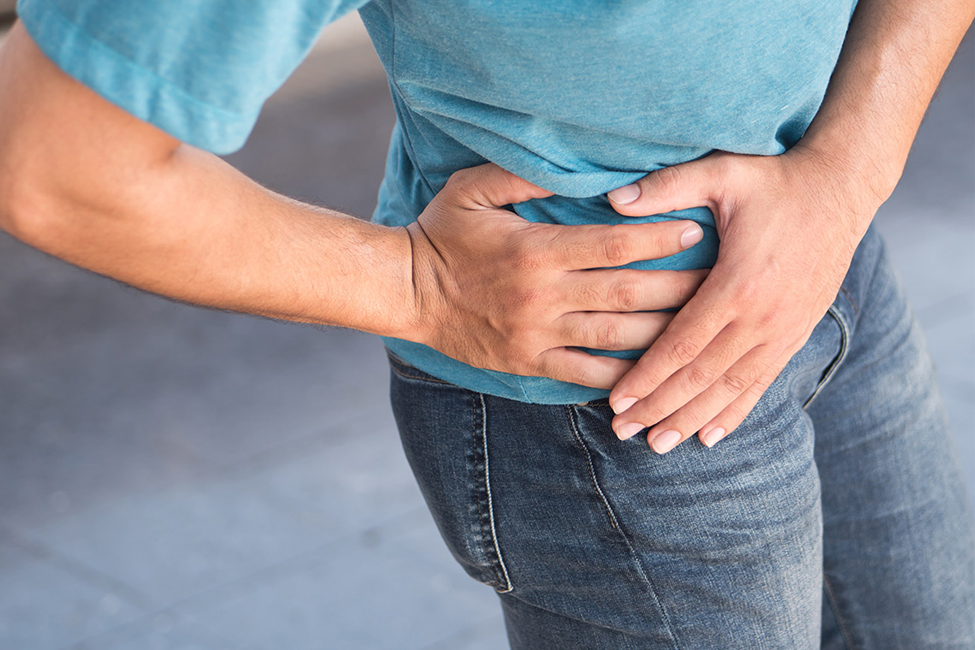
- Pain in the groin or front of the hip, sometimes spreading to the thigh or knee
- Stiffness in the morning or after sitting, which eases once you move
- Pain when putting on socks and shoes, getting out of a car or sitting cross-legged
- Clicking, catching or locking in the hip
- Less range of movement, especially when turning the leg inwards
- Pain during or after sport that is taking longer to settle
- Limping after long walks or runs
Seek urgent medical care if you cannot bear weight, have a hip that looks deformed after a fall, or have hip pain with fever.
How is hip damage after a sports injury assessed?
Assessment usually starts with a consultation and physical examination, followed by imaging if needed.
- History and examination: your doctor asks about past injuries, your sport and training load, and when the pain occurs. Specific movement tests check for impingement and labral irritation.
- X-rays: these show hip shape (cam or pincer), joint space and bone spurs. They are usually the first imaging test.
- MRI or MR arthrogram: this shows the labrum and cartilage in more detail. It is useful when a labral tear or early cartilage damage is suspected but X-rays look normal.
What are the treatment options?
Treatment depends on your age, symptoms, activity goals and how much the joint has changed. Most people start with non-surgical care.
Non-surgical care (first-line)
International guidelines recommend exercise therapy and education as the first treatment for hip OA. The 2025 JOSPT clinical practice guideline for hip OA gives exercise therapy its highest grade of recommendation. Non-surgical care may include:
- A structured physiotherapy programme to strengthen the hip, glutes and core
- Changing how you train, such as reducing deep hip flexion or pivoting loads for a period
- Weight management, where needed
- Pain relief medication, as advised by your doctor
- Image-guided injections for selected patients, to help with pain while you continue rehabilitation
Surgical options
- Hip arthroscopy (keyhole surgery): may be considered for symptomatic FAI or labral tears that have not improved with non-surgical care, usually when there is little or no arthritis. It aims to relieve symptoms and improve function. Whether it delays OA over the long term is still being studied.
- Hip replacement: may be considered for advanced hip OA when pain and stiffness affect daily life despite other treatment.
Your orthopaedic surgeon will discuss the possible benefits, risks and recovery for each option based on your situation.
How can you protect your hips while staying active?
You do not need to stop exercising. Staying active supports joint health. These steps can help reduce strain on your hips:
- Get hip injuries checked properly. Groin pain that lasts more than a few weeks deserves an assessment, not just rest.
- Complete your rehabilitation. Return to sport gradually, once strength and movement have recovered.
- Build hip and core strength. Exercises such as bridges, side planks and controlled single-leg work help support the joint.
- Manage your training load. Increase intensity and volume step by step, and include rest days.
- Mix your activities. Swimming, cycling and brisk walking add fitness with less impact on the hip.
- Keep to a healthy weight. Less body weight means less load on the hip joint.
When should you see an orthopaedic specialist?
Consider seeing an orthopaedic specialist if you have hip or groin pain that lasts more than six weeks, keeps coming back after sport, or affects sleep, work or daily tasks. This also applies if you have had a hip injury in the past and are now noticing stiffness or clicking. At The Orthopaedic Practice and Surgery (TOPS), our orthopaedic surgeons assess hip pain in active adults, from labral tears and hip impingement to hip arthritis. Book a consultation to discuss your symptoms and options.
Frequently asked questions
Can an old sports injury cause hip arthritis years later?
Yes. Injuries to the labrum, cartilage or bones of the hip can change how load passes through the joint. This can lead to gradual cartilage wear and hip osteoarthritis many years, often a decade or more, after the injury.
Does running cause hip arthritis?
Recreational running is not linked to more hip arthritis. In a 2017 review of about 115,000 people, recreational runners had lower rates of hip and knee OA than non-runners. Higher rates were seen in competitive, high-mileage runners.
Does a hip labral tear always lead to arthritis?
No. Not every labral tear leads to arthritis. However, studies in young football players found that labral tears were linked to cartilage loss over two to three years. Getting a persistent tear assessed can help guide early management.
What is hip impingement (FAI), and is it linked to arthritis?
Hip impingement, or femoroacetabular impingement, is when the ball and socket of the hip are shaped in a way that makes them press together during certain movements. Over time, this can damage the labrum and cartilage. FAI is considered an important cause of hip OA in younger, active adults.
Can I keep playing sport if I have early hip arthritis?
Many people can, with changes. Your doctor or physiotherapist may suggest adjusting training load, building strength and choosing lower-impact activities. The right plan depends on your symptoms and the state of your joint.
At what age does hip arthritis start after a sports injury?
There is no fixed age. Some active adults notice symptoms in their 30s or 40s, especially after a significant hip injury or with untreated FAI. Others develop OA much later or not at all.
Can hip arthroscopy prevent arthritis?
Hip arthroscopy can relieve symptoms of FAI and labral tears in selected patients. Whether it prevents or delays OA in the long term is still being studied. It is generally less suitable once arthritis is advanced.
This article is for general information and does not replace a medical consultation. Please see a doctor for advice on your condition.
Consulting an orthopaedic specialist at TOPS
If a previous athletic injury continues to trouble your joint, or if you encounter persistent groin discomfort, stiffness or mechanical catching, a medical evaluation can help clarify your joint health. Gaining clarity on your condition allows you to determine steps to maintain an active lifestyle safely.
About The Orthopaedic Practice and Surgery (TOPS)
The Orthopaedic Practice and Surgery (TOPS) is a specialist orthopaedic clinic based in Singapore focusing on comprehensive musculoskeletal care for upper and lower limbs. Our clinical team evaluates individuals experiencing groin discomfort, athletic joint injuries, labral tears, femoroacetabular impingement and progressive joint degeneration.
About Dr Lim Chin Tat
Dr Lim Chin Tat is an orthopaedic surgeon practicing at TOPS who manages hip and knee disorders, including joint reconstruction.
- Prior to private practice, he served as a Consultant Orthopaedic Surgeon at National University Hospital.
- He held an academic appointment as Assistant Professor with the Department of Orthopaedic Surgery at Yong Loo Lin School of Medicine, National University of Singapore.
- He completed subspecialty fellowship training at Stanford Hospital, Stanford University (USA) and the Nuffield Orthopaedic Centre, Oxford University (UK).
Scheduling an assessment
- Online booking: Book a consultation
- WhatsApp: +65 8218 5638
References
- Tran G, et al. Does sports participation (including level of performance and previous injury) increase risk of osteoarthritis? A systematic review and meta-analysis. British Journal of Sports Medicine, 2016.
- Elite impact sports and hip osteoarthritis: a systematic review. American Journal of Sports Medicine, 2017.
- Alentorn-Geli E, et al. The association of recreational and competitive running with hip and knee osteoarthritis. JOSPT, 2017.
- Heerey J, et al. Cam morphology is associated with MRI-defined cartilage defects and labral tears. 2021.
- Heerey J, et al. Labral pathology predicts articular cartilage loss in young adult football players (FORCe study).
- Femoroacetabular impingement in athletes: systematic review.
- Koc T, et al. Hip osteoarthritis clinical practice guideline, JOSPT 2025 (summary).
- Skou ST, Roos EM. Physical therapy for patients with knee and hip osteoarthritis. Clinical and Experimental Rheumatology, 2019.